

How to Write a Check: Step-by-Step Guide
Last updated on April 6, 2026
Learn how to write a check step by step.
To write a check, you need to fill in the date, payee name, payment amount (in both numbers and words), an optional memo and your signature. Use ink for every field and avoid leaving any blank spaces open.
Even with the rise of digital payments, checks are still a reliable way to send money for rent, large purchases and official transactions. Whether you’re opening your first bank account or you’ve simply never had to fill one out before, learning how to write a check is a practical skill worth having.
Keep reading to learn the steps to fill out a check correctly, common mistakes to watch for and when a check might be your best payment option.
Key Takeaways
- A personal check is a written instruction to your bank or credit union to pay a specific amount from your checking account to the person or business you name
- Writing the dollar amount in both numbers and words helps prevent fraud and ensures the correct amount is processed
- Always use ink and avoid leaving blank spaces on any line, since empty space can be altered after you hand the check over
- Recording every check in your check register helps you track your balance and avoid overdraft fees
- If you make a mistake, you can void the check by writing “VOID” in large letters across the front rather than trying to correct it.
What Is a Check?
A personal check is a document that tells your financial institution to pay a specific amount from your checking account to whoever you’ve written it out to. When the recipient deposits the check, the funds are withdrawn from your checking account.
Checks include built-in security features, like requiring both a numerical and written dollar amount, that help protect against unauthorized changes. Understanding the difference between a checking vs. savings account can help you determine which account to use for check-writing.
When Do You Use a Check?
While many transactions have moved online, checks are still useful, and sometimes required, in several situations. Here are some of the most common reasons people still write checks:
- Rent or landlord payments: Many landlords prefer checks because they create a clear paper trail for both parties
- Government or official payments: Some courts and government agencies require checks or money orders rather than card payments
- Large purchases: Paying contractors or vehicle deposits with a check avoids credit card processing fees
- Mailing payments: When you need to send money by mail, a check is far safer than cash
- Gifts: Writing a check for a birthday or graduation lets the recipient deposit it whenever they’re ready
How Do You Write a Check?
Every section of a check serves a purpose, and filling out each one correctly ensures your payment is processed without issues. Here’s how to write a check from start to finish:
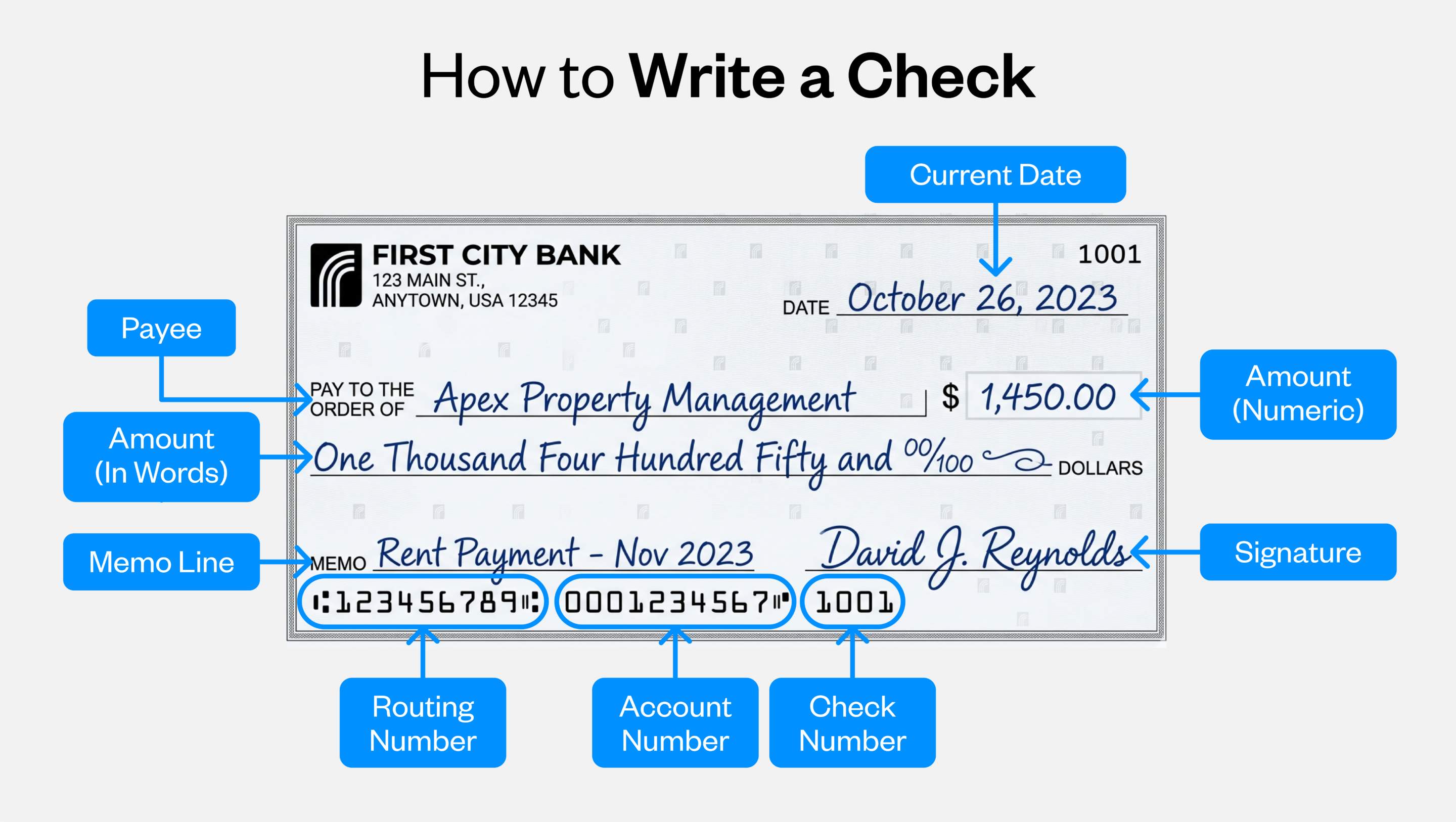
Step 1: Write the current date
In the top right corner, write today’s date. This tells the bank when the check was issued. A check with no date (or a future date) can cause processing delays. Use the standard month/day/year format.
Step 2: Write the payee’s name
On the line that says “Pay to the Order of,” write the full name of the person or business you’re paying. Use the payee’s legal or official business name when possible. An incorrect name can cause the check to be rejected.
Step 3: Write the payment amount in numbers
In the small box to the right of the payee line, write the dollar amount using numbers. Try to write as close to the dollar sign as possible so no one can add extra digits in front of your amount.
Step 4: Write the payment amount in words
Write out the dollar amount in words below the payee's name. For example, $1,250.43 would be “One thousand two hundred fifty and 43/100” (the cents are not written out and shown in fraction format). This line is the legal amount of the check. If the written and numerical amounts don’t match, the bank goes with what’s written in words.
Step 5: Add a memo (optional)
The memo line in the bottom left corner is optional but useful. It’s where you note what the payment is for, like “March rent” or an invoice number. Knowing what to put in the check memo line helps both you and the recipient keep accurate records, especially at tax time.
Step 6: Sign the check
Sign your name on the line in the bottom right corner. Your signature authorizes the bank to release the funds. A check without a signature is invalid and won’t be processed.
Example of a Completed Check
Below is an example of a properly filled-out check with callouts showing each section. Each labeled area corresponds to the steps above, from the date and payee name at the top, to the amounts in the middle and the memo and signature lines at the bottom.
How to Record a Check in Your Check Register
Every time you write a check, record it in your check register. A check register is a log — either a physical booklet from your checkbook or a digital spreadsheet — where you track the check number, date, payee, amount and running balance.
This habit helps you know how much money is available in your account at any given time, which is important because checks don’t always clear immediately. Forgetting to account for an outstanding check can lead to overdraft fees.
Common Mistakes to Avoid When Writing a Check
Small errors on a check can lead to rejected payments or security risks. Here are the most common mistakes to watch for:
- Writing the wrong amount: Double-check that the numerical amount matches what you’ve written in words. A mismatch may cause the bank to reject the check or process the written amount instead
- Leaving blank spaces: Fill each line completely and draw a line through any extra space so no one can add unauthorized information
- Forgetting to sign: An unsigned check is invalid. Get in the habit of signing as the very last step
- Using a pencil instead of ink: Pencil can be erased and rewritten, which opens the door to fraud. Always use blue or black ink. You should also try to use a pen with fraud resistant ink such as gel ink or other fraud prevention ink
- Mismatched written and numerical amounts: When the words and numbers don’t match, it creates confusion and delays. Confirm both figures before handing over the check
How to Void a Check
Sometimes you need to cancel a check before anyone cashes it. Maybe you made a writing error, need to provide bank details for direct deposit setup or want to cancel a payment.
To void a check, write “VOID” in large, bold letters across the front. Covering enough surface that no one can use it. Don’t forget to record the voided check in your check register and shred it rather than tossing it in the trash, since it still contains your account information.
Alternatives to Writing Checks
Checks aren’t your only option for moving money. If you prefer faster or more convenient methods, here are a few alternatives worth considering:
- Online bill pay: Banks and credit unions let you schedule one-time or recurring payments directly from your account through their website or app
- ACH bank transfers: These electronic transfers move money between accounts and are commonly used for payroll and recurring bills. If you’re learning how to switch banks, most institutions make ACH setup straightforward
- Payment apps: Services like Venmo, Zelle and PayPal let you send money instantly from your phone. A digital wallet can also store payment information for quick in-store and online transactions
- Debit card payments: A debit card pulls funds directly from your checking account at the register or online, so there’s nothing to write out or mail. Understanding the differences between a debit vs credit card can help you decide which one to reach for at checkout
Wrapping Up: How to Write a Check
Knowing how to write a check is one of those fundamental financial skills that comes in handy when you least expect it. Whether you’re paying rent, covering a contractor invoice or setting up direct deposit, filling one out correctly ensures your payment gets where it needs to go without delays or security issues.
If you’re looking for a checking account with no hidden fees and full online banking access, California Credit Union has you covered. You can open a bank account online in minutes, and if you’re curious about what sets a credit union apart, explore the differences between a bank vs. credit union to see which option works best for you.