

Is Zelle Safe? What You Need to Know About Zelle Security & Scams
Last updated on September 18, 2026
Zelle has become one of the most popular ways to send money to friends, family and small businesses because it’s fast and connects directly to your bank account. Zelle is also generally safe when you send money to people you already know and trust.
- Zelle moves money quickly between bank accounts, which makes it convenient but hard to reverse
- Zelle scams typically involve authorizing a payment after being deceived
- Your bank or credit union manages the authentication and security behind every Zelle transaction
- Verifying the recipient before you send money is the single best way to avoid a Zelle scam
- Reporting unauthorized activity right away gives you the best chance of recovering your money
Learn how Zelle protects your payments and common scams to watch for.
Zelle is generally safe when you use it the way it’s meant to be used: sending money to people you already know and trust. The bigger risk isn’t the platform itself but the scams that trick people into sending money to someone they shouldn’t.
Zelle has become one of the most popular ways to send money to friends, family and small businesses because it's fast and connects directly to your bank account. That speed is also why it's worth understanding how Zelle works, what security it offers and where the real risks come from.
Key Takeaways
- Zelle moves money quickly between bank accounts, usually within minutes, which makes it convenient but hard to reverse
- Zelle scams typically involve authorizing a payment after being deceived, while Zelle fraud means someone accessed your account without permission
- Your bank or credit union manages the authentication and security behind every Zelle transaction
- Verifying the recipient before you send money is the single best way to avoid a Zelle scam
- Reporting unauthorized activity right away gives you the best chance of recovering your money
What Is Zelle?
Zelle is a payment network that lets you send and receive money directly between bank accounts, usually through your bank or credit union's mobile app.
Payments sent through Zelle usually arrive within minutes, since the money moves directly between accounts rather than sitting in a separate app balance. That speed is convenient, but it leaves very little room to catch a mistake once you hit send. Because of this, only use it with people you already know and trust, and double-check who you're paying before you confirm.
Is Zelle Safe to Use?
Yes, Zelle is safe to use when you're sending money to someone you know for a legitimate reason. Zelle works through participating banks and credit unions rather than as a standalone app holding your money, so it's protected by the same security your financial institution already uses for your banking information.
That includes login authentication, account monitoring and alerts that flag unusual activity. The question almost always comes down to how the payment is being used, not whether the platform itself is secure.
How Secure Is Zelle?
Zelle relies on several layers of security that work together behind the scenes. Here's what helps keep your account protected:
- Authentication: Your bank or credit union verifies your identity before you can log in or send a payment, often with a password plus an added verification step
- Account security: Your Zelle activity is tied to your existing bank account, so it benefits from the same protections your financial institution already has in place
- Transaction monitoring: Financial institutions watch for unusual patterns that might signal fraud, such as an unfamiliar device or a sudden change in payment behavior
- Alerts from your financial institution: Many banks send real-time alerts when a Zelle payment goes out or comes in, so anything unfamiliar is easy to spot
- Secure banking apps: Zelle payments run through your bank's official app, which includes security measures like session timeouts and device recognition
- Encryption: Sensitive information, including account numbers, is encrypted during transmission to keep it out of the wrong hands
Unfortunately, these cybersecurity protections can't stop you from authorizing a payment to someone who has deceived you. That's where most Zelle safety issues happen.
What Are the Biggest Zelle Safety Risks?
The biggest risks with Zelle usually fall into one of two categories: scams and fraud. They sound similar, but the difference matters, especially when it comes to getting your money back.
Zelle scams
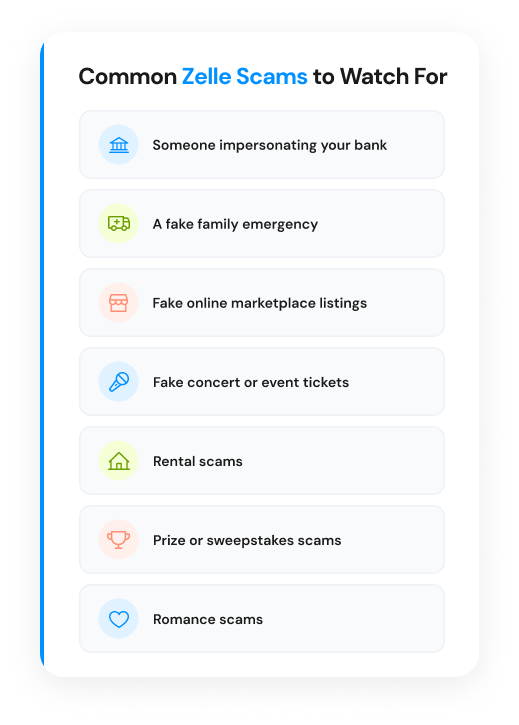
Zelle scams happen when you authorize a payment yourself, but only because someone deceived you into doing it. Because you technically approved the transaction, these cases are harder to reverse. A few examples of common internet scams affecting people who use Zelle are:
- Bank impersonation: Someone poses as your bank or credit union and asks you to send money to "verify" your account or reverse a fraudulent charge
- Fake family emergencies: A scammer pretends to be a relative in urgent need of money, often over text or a spoofed call
- Fake online marketplace listings: A seller takes payment for an item that never arrives
- Fake concert or event tickets: Scammers sell tickets that don't exist, then disappear once paid
- Rental scams: A fake listing asks for a deposit or first month's rent before you've toured the property
- Prize or sweepstakes scams: You're told you've won something, but you need to send a "fee" first to claim it
- Romance scams: Someone builds a relationship online over weeks or months, then asks for money for an emergency
The Consumer Financial Protection Bureau has warned that scammers often impersonate banks, government agencies, family members and businesses when requesting payment through mobile payment services like Zelle.
Zelle fraud
Zelle fraud is different from a scam because you didn't authorize the payment at all. This happens when someone gains access to your account and sends money without your knowledge.
If you notice a Zelle payment you didn't authorize, contact your bank or credit union immediately. Zelle advises reaching out to your financial institution right away so they can investigate and take next steps.
Can Someone Hack Your Zelle Account?
Zelle itself isn't something you log into on its own. When you use it through your mobile banking app, your bank or credit union manages the account connection and authentication behind it.
Still, criminals find ways to gain unauthorized access to accounts connected to Zelle. Here are some of the more common tactics:
- Stolen banking credentials: Login information leaked or stolen elsewhere online gets reused to access your bank account
- Phishing: A fake email or text convinces you to enter your banking login on a spoofed website
- Fake customer service calls: Someone poses as your bank's fraud department to talk you into sharing sensitive details
- Malware: Malicious software on your device captures login credentials or intercepts verification codes
- Weak or reused passwords: A password used across multiple sites makes it easier for criminals to break into your account
- Social engineering: Scammers use personal details, often gathered from social media, to sound convincing to you or your bank
It's worth learning how to know if you've been hacked so you can catch the warning signs early.
How Can You Use Zelle Safely?
Most Zelle risks come down to human error rather than a flaw in the technology. Here's how to lower your risk:
- Verify the recipient before sending money: Double-check the name, phone number or email tied to the account before confirming a payment
- Don't send money to strangers: Zelle is built for people you already know, not for online purchases from someone you've never met
- Be careful with urgent payment requests: Scammers create pressure on purpose, so slow down if something feels rushed
- Don't share your banking credentials: No legitimate bank or credit union will ever ask for your password or one-time verification code
- Use your bank's official app: Send Zelle payments only through your financial institution's official app, not a third-party site or link
Pair this advice with these debit card security tips, since the same instincts, like slowing down and verifying who you're dealing with, apply across your banking activity.
Can You Cancel a Zelle Payment?
Whether you can cancel a Zelle payment depends on the status of the payment. If the person you sent money to is already enrolled in Zelle, the payment typically can't be canceled once it's authorized, since Zelle moves money quickly between accounts.
If the recipient hasn't enrolled yet, there may still be a window to cancel the payment before they claim it. Check your bank or credit union's app as soon as possible if you need to try.
Can You Get Money Back From Zelle?
It depends on whether the payment was unauthorized or whether you authorized it after being deceived. Unauthorized payments from your account can qualify for protections under federal law in certain situations, so report them to your bank or credit union right away.
Recovery is generally harder if you were scammed into sending the money yourself, since you technically approved the transaction. Certain qualifying imposter scams may still be eligible for reimbursement depending on your bank's policies, so contact your financial institution immediately rather than assuming nothing can be done.
For purchases where buyer protection matters more, it’s important to understand how to use a credit card because it’s often a safer option than Zelle.
Wrapping Up: Is Zelle Safe to Use?
Zelle is a safe and convenient way to send money when you're paying someone you know for a legitimate reason. The real risk isn't the technology but the scams designed to trick you into sending a payment you can't easily get back, so verifying who you're paying and staying alert to pressure will protect you more than any built-in security feature.
At CCU, digital banking tools like Zelle are built with your security in mind, backed by the same protections and monitoring you already count on for your everyday banking. If you have questions about using Zelle safely, we're here to help.