

Emergency Funds: How Much Emergency Savings Should I Have?
Last updated on August 24, 2026
An emergency fund can help protect you from unexpected expenses and financial setbacks. Learn how much to save, where to keep your money and how a credit union can help you build emergency savings over time.
- $500 to $1,000 is a smart first step toward building an emergency fund
- Save three to six months of essential expenses for unexpected bills, repairs or loss of income
- Automatic savings tools can make it easier to build your financial cushion over time
- Keep emergency savings accessible in a credit union savings or money market account
- Emergency savings can help you avoid relying on high-interest credit cards or loans
- Get support from a credit union with savings tools, guidance and accounts designed to help you prepare for the unexpected
Learn why having 3 to 6 months of savings set aside in an emergency fund is recommended.
A good emergency savings goal is typically three to six months of essential expenses like medical bills, car repairs or loss of income, but the right amount depends on your income, monthly costs and financial situation. If you’re just starting to save, building a smaller cushion of $500 to $1,000 can be a great first step.
Unexpected expenses have a way of showing up at the worst possible time, whether it’s a car repair, medical bill or sudden loss of income. An emergency fund can give you a financial cushion when those moments happen, but figuring out how much to save can feel difficult, especially when you’re balancing everyday expenses and other financial goals. How much you should have in savings for an emergency will vary person to person, but setting a realistic goal and using tools like a dedicated savings account and automatic transfers can help you gradually create a safety net that works for you.
Key Takeaways
- An emergency fund is a dedicated account set aside for unexpected expenses, such as a temporary loss of income, car or home repair or medical expenses
- Aim to save three to six months of essential expenses in emergency savings, but start with a smaller goal like $500 to $1,000 if you’re building savings for the first time
- Keep emergency savings in a dedicated account, such as a savings account or money market account, where your money stays accessible while earning dividends or interest
- Build your emergency fund gradually by setting a realistic goal, automating transfers and saving extra income whenever possible
- A credit union can provide tools, account options and financial guidance to help you create consistent savings habits and work toward long-term financial goals
What Is an Emergency Fund?
An emergency fund is money you set aside specifically for unexpected expenses or financial setbacks. Unlike savings for a vacation, a home upgrade or other planned purchases, an emergency fund is there for situations you cannot easily predict, such as an unexpected car or home repair, medical expense or temporary loss of income. Keeping these funds in a separate savings account can help you stay prepared while making it less tempting to spend the money on everyday purchases.
For many people, an emergency fund starts with a small goal, such as saving $500 or $1,000, and grows over time. The purpose is not to have a perfect amount saved right away, but to create a financial buffer that helps you handle surprises without relying on high-interest credit cards or loans.
How Much Emergency Savings Should You Have?
Most people should aim to save enough to cover three to six months of essential living expenses in an emergency fund. This money can help cover unexpected costs or a temporary loss of income without relying on credit cards, personal loans or other sources of debt.
The right amount depends on your personal situation, including your monthly expenses, job stability and financial responsibilities. If you are just starting to save, building a smaller emergency fund of $500 to $1,000 is a practical first goal.
Emergency Savings Goals by Stage | |
Savings Goal | Best For |
$500 to $1,000 | Building your first financial safety net and covering smaller unexpected expenses |
One month of essential expenses | Creating a stronger cushion while developing consistent savings habits |
Three to six months of essential expenses | A common long-term emergency fund goal for most households |
Six months or more of expenses | People with variable income, self-employment or less predictable financial situations |
To get started, use our free savings goal calculator to make progress toward achieving your financial goals.
How Do You Calculate Your Emergency Savings Goal?
To calculate how much emergency savings you need, calculate your essential monthly expenses and multiply that amount by the number of months you want your fund to cover.
- Emergency savings formula: Essential monthly expenses x number of months = emergency fund goal
For example, if your essential expenses are $3,000 per month:
- A 3-month emergency fund goal would be $9,000
- A 6-month emergency fund goal would be $18,000
Where Should You Keep Your Emergency Fund?
The best place to keep your emergency fund is an account that keeps your money safe, accessible and separate from your everyday spending. For most people, a savings account or money market account can be a good fit because these options allow you to access your funds when an unexpected expense comes up while still helping your money earn dividends or interest. There are several types of savings accounts and banking accounts to consider for an emergency fund.
- Savings accounts: A savings account is one of the most common places to keep an emergency fund, as many offer compound interest that helps your money grow. It provides a simple way to set money aside, and many financial institutions offer digital and mobile banking tools that make it easy to monitor your balance, set up automatic transfers and track your savings growth
- Money market accounts: When comparing a money market account vs savings account, the primary difference is how you access your money and minimum balance requirements. A money market account typically comes with a higher interest rate compared to regular savings accounts. However, they often have higher minimum balance requirements compared to savings accounts
- Share certificates: Share certificates allow you to deposit money for a set period of time in exchange for a fixed dividend rate. Because funds are typically intended to stay in the account until the maturity date, they may not be the best choice for your entire emergency fund. However, once you have enough accessible savings, a share certificate can be one way to put extra savings to work while keeping a portion of your money set aside
How Do You Build an Emergency Fund?
The best way to build an emergency fund is to start with a realistic savings goal and contribute to it consistently over time. Learning how to save money for an emergency doesn’t require several months of expenses all at once. Small, regular deposits can add up and help you create a financial cushion for unexpected expenses. Here’s how to create an emergency fund:
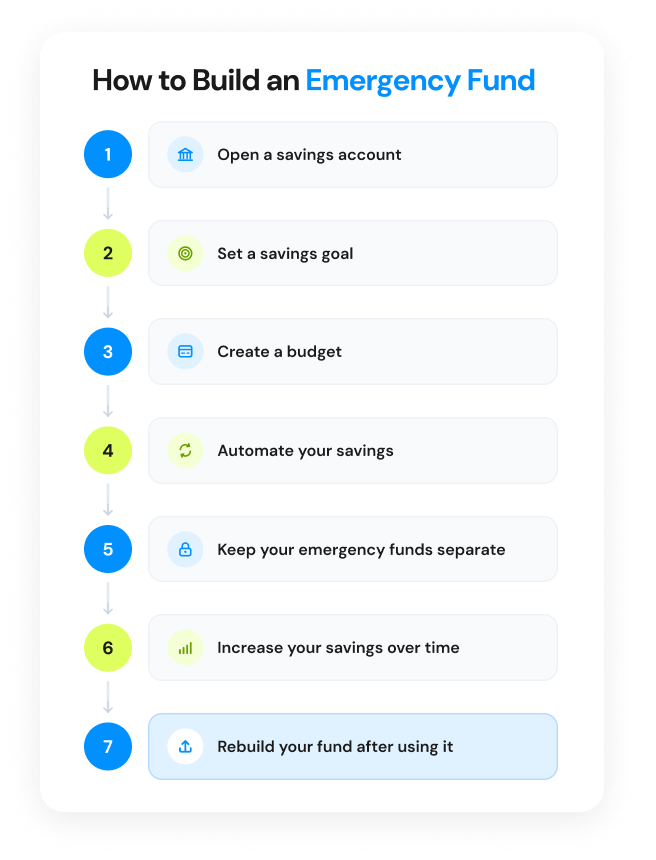
- Open a savings account: To begin, look into how to open a bank account. Most banks and credit unions make opening an account online, over the phone or at an in-person branch easy. Gather the required documentation, such as a government-issued ID and proof of residency, complete the application and fund your account
- Set a savings goal: With your account set up, decide how much you want to save. A common long-term goal is three to six months of essential expenses, but your first milestone can be much smaller. For example, your first goal can be to save $500 to $1,000 for smaller expenses, then build enough savings to cover one month of essential expenses before working toward a goal of three to six months of essential expenses
- Create a budget: Review your monthly income and expenses to see how much you can comfortably set aside. Even a small amount each month can help you build momentum. Look for opportunities to redirect money toward your emergency savings, such as reducing unused subscriptions, cutting back on occasional purchases or setting aside money after paying off a loan or credit card
- Automate your savings: One of the easiest ways to build an emergency fund is to make saving automatic. Setting up recurring transfers from your checking account to your savings account can help you save before you get a chance to spend the money.
- Keep your emergency savings separate: A dedicated savings account can make it easier to protect your emergency fund from everyday spending. Keeping this money separate from your checking account helps you stay focused on your goal while still allowing you to access funds when a true emergency happens
- Increase your savings over time: Your emergency fund doesn’t have to stay the same forever. As your income changes, you pay off debt or your financial priorities shift, consider increasing your contributions
- Rebuild your fund after using it: Your emergency fund is exactly what it is there for. If you need to withdraw money for an unexpected expense, make rebuilding your savings a new goal once the expense is covered
Wrapping Up: Start Building Your Emergency Savings Today
An emergency fund is focused on creating a habit of saving and building a financial cushion that can support you when unexpected expenses come up. By setting a realistic goal, using automatic transfers and choosing the right savings account, you can make steady progress toward greater financial confidence.
One of the benefits of a credit union like California Credit Union is having access to member-focused tools and guidance that can help you manage your money, save consistently and work toward your financial goals. Whether you’re opening your first savings account or growing an existing fund, we can help you stay on track. Explore our personal banking solutions today to get started.