
What Are Credit Card Rewards? How They Work & How to Earn Them
Last updated on October 8, 2026
Credit card rewards are incentives issuers offer for using their card. Every time you make a purchase with a rewards credit card, the issuer credits your account with a set amount of cash back, points or miles based on your card’s earning rate.
- You can earn credit card rewards as a percentage or fixed rate on purchases, paid out in cash back, points or miles
- Earning rates vary by card and spending category, so the right card depends on how you spend
- Points and miles can lose or gain value depending on how you redeem them
- California Credit Union offers a few credit cards with rewards. Our Rewards Visa® and Share-Secured Rewards Visa® cards earn 5X points on streaming services, 3X points on gas, groceries and restaurants and 1X points on everything else
Learn how credit card rewards work, including cash back, points and miles.
Credit card rewards are incentives issuers offer for using their card, usually paid out as points, miles or cash back on purchases you already make. You earn them automatically every time you use the card, and the amount depends on the card and what you're buying.
Key Takeaways
- You can earn credit card rewards as a percentage or fixed rate on purchases, paid out in cash back, points or miles
- Earning rates vary by card and spending category, so the right card depends on how you spend
- Points and miles can lose or gain value depending on how you redeem them
- Sign-up bonuses can add significant value, but usually come with a minimum spending requirement
- Rewards only pay off if you avoid interest charges and fees that cancel out what you earn
How Do Credit Cards Work?
Every time you make a purchase with a rewards credit card, the issuer credits your account with a set amount of cash back, points or miles based on your card's earning rate, usually a percentage of what you spend.
For example, a card offering 2% cash back would earn you $20 on a $1,000 purchase. Flat-rate cards work this way across every purchase, but many rewards cards pay a higher rate in specific categories, like groceries or gas, and a lower rate on everything else. Some issuers also let you load your card into a digital wallet, so purchases still earn rewards when you're paying with your phone.
Of course, it's important to learn how to use a credit card before you decide on one just for its rewards.

How Are Credit Card Rewards Calculated?
Credit card rewards are calculated in a few different ways. Cash back cards typically use a straightforward percentage, so a 1.5% card pays $1.50 for every $100 spent. Points and miles cards instead award a set number of points per dollar, converted to value based on how you redeem them.
Bonus categories add another layer, since a card might offer a higher rate on dining or travel for part of the year, or rotate categories quarterly.
What Are the Different Types of Credit Card Rewards?
Most credit cards with rewards fall into one of three categories: points, cash back or travel miles. The best fit depends on how you like to spend and redeem.
Credit card points
Points-based rewards let you earn a set number of points for every dollar spent, redeemable for merchandise, gift cards, travel or statement credits. Point values shift depending on the redemption method, so the same balance can be worth more or less depending on how you use it.
At California Credit Union, we offer a few credit cards with rewards. The Rewards Visa® and Share-Secured Rewards Visa® are built around this points system, earning 5X points on streaming services, 3X points on gas, groceries and restaurants and 1X points on everything else, so everyday spending adds up quickly.
Cash back rewards
Cash back is a percentage of your purchase returned to you, either as a flat rate on everything or a higher rate in specific categories like groceries, gas or dining, usually with a cap on the higher rate. Common redemption options include statement credits, direct deposits and gift cards, which makes cash back one of the more flexible reward types.
Travel miles and travel rewards
Travel-focused cards earn miles instead of cash or points, typically redeemed for flights, hotel stays, car rentals or other travel expenses. Many partner with specific airlines or hotel chains, letting you transfer miles into a loyalty program for a potentially higher redemption value. If you're wondering how to maximize credit card rewards for travel, it usually comes down to matching categories to your travel spending and understanding transfer partner ratios.
How Can You Earn More Credit Card Rewards?
A few practical habits can help you earn more without changing how much you actually spend. Here's what to keep in mind:
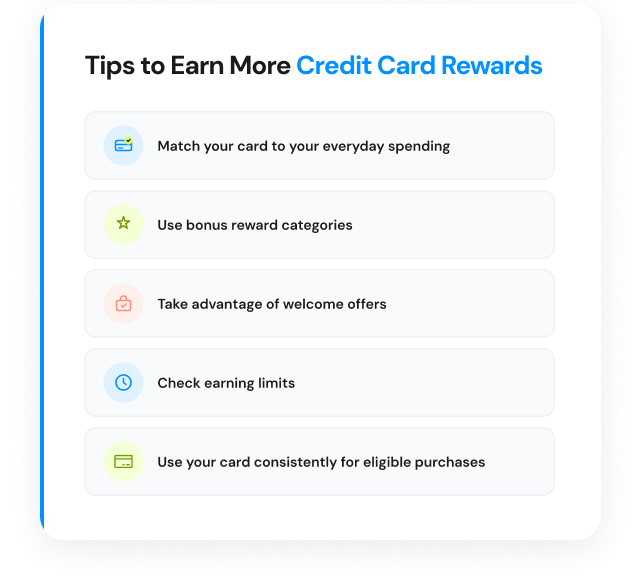
- Match your card to your spending: Pick a rewards structure that lines up with where you already spend the most
- Use bonus categories wisely: Take advantage of higher rates on purchases you're already planning, rather than spending more to chase a bonus
- Understand introductory offers: Check the spending requirement and time frame before counting on a sign-up bonus
- Watch earning caps: Some bonus categories stop paying the higher rate once you hit a spending limit
- Use the card consistently: Putting eligible everyday purchases on the card, when it makes sense, helps rewards accumulate over time
This kind of intentional spending is really just an extension of saving money — you're getting value back on purchases you were already going to make.
What is a credit card sign-up bonus?
A sign-up or welcome bonus is a one-time reward, often a larger sum of points, miles or cash back, offered when you open a new card and meet a minimum spending requirement within a set time frame, usually the first three months. These bonuses add value upfront, but only if you can meet the requirement through purchases you'd be making anyway. Some issuers exclude balance transfers or cash advances from counting toward it, so review the terms before applying.
Our article on how to get a credit card covers what approval typically requires if you're still deciding.
How Do You Redeem Credit Card Rewards?
Redemption options vary by card, but most rewards programs offer a handful of common choices:
- Cash back redemption: Convert your earnings into cash through statement credits or a check
- Statement credits: Apply your rewards balance toward your card statement
- Direct deposits: Send your cash back straight to a linked bank account
- Gift cards: Trade points or cash back for gift cards to retailers or restaurants
- Travel bookings: Use points or miles to book flights, hotels or rental cars through the issuer's portal or a transfer partner
- Merchandise: Some programs let you redeem for electronics or other items, though this often provides the lowest value per point
What Are the Pros and Cons of Credit Card Rewards?
Whether it's worth getting a rewards credit card depends on your spending habits and how disciplined you are about paying off your balance. Here's a look at both sides.
Pros:
- Earning on purchases you already make: You get value back on everyday spending without changing your habits
- Flexible redemption options: Most programs let you choose how to use your rewards
- Potential sign-up bonuses: New cardholders can often earn a substantial bonus early on
Cons:
- Annual fees: Some rewards cards charge a yearly fee that eats into the value you earn
- Spending requirements: Bonuses and top-tier rewards sometimes require a spending minimum
- Redemption restrictions: Certain methods offer less value than others, or come with blackout dates and limits
- Interest charges: Carrying a balance means paying credit card interest that can outweigh any rewards earned, so it's worth understanding your card's interest rates before relying on rewards to offset spending
Wrapping Up: Making the Most of Your Credit Card Rewards
Credit card rewards can add real value to spending you're already doing, but only if you understand how they're earned, calculated and redeemed. Comparing cash back, points and travel rewards against your own habits, watching for fees and interest and reading the fine print on bonuses and expiration policies help you get the most out of a rewards card.
California Credit Union's Rewards Visa® and Share-Secured Rewards Visa® offer a straightforward points structure built around everyday categories. If you're still getting your finances set up, compare the differences between a bank vs. credit union, look into how to open a bank account online or read up on how to switch banks before applying for a card.