How Do ATMs Work? A Guide to ATM Technology & Transactions
Last updated on September 21, 2026
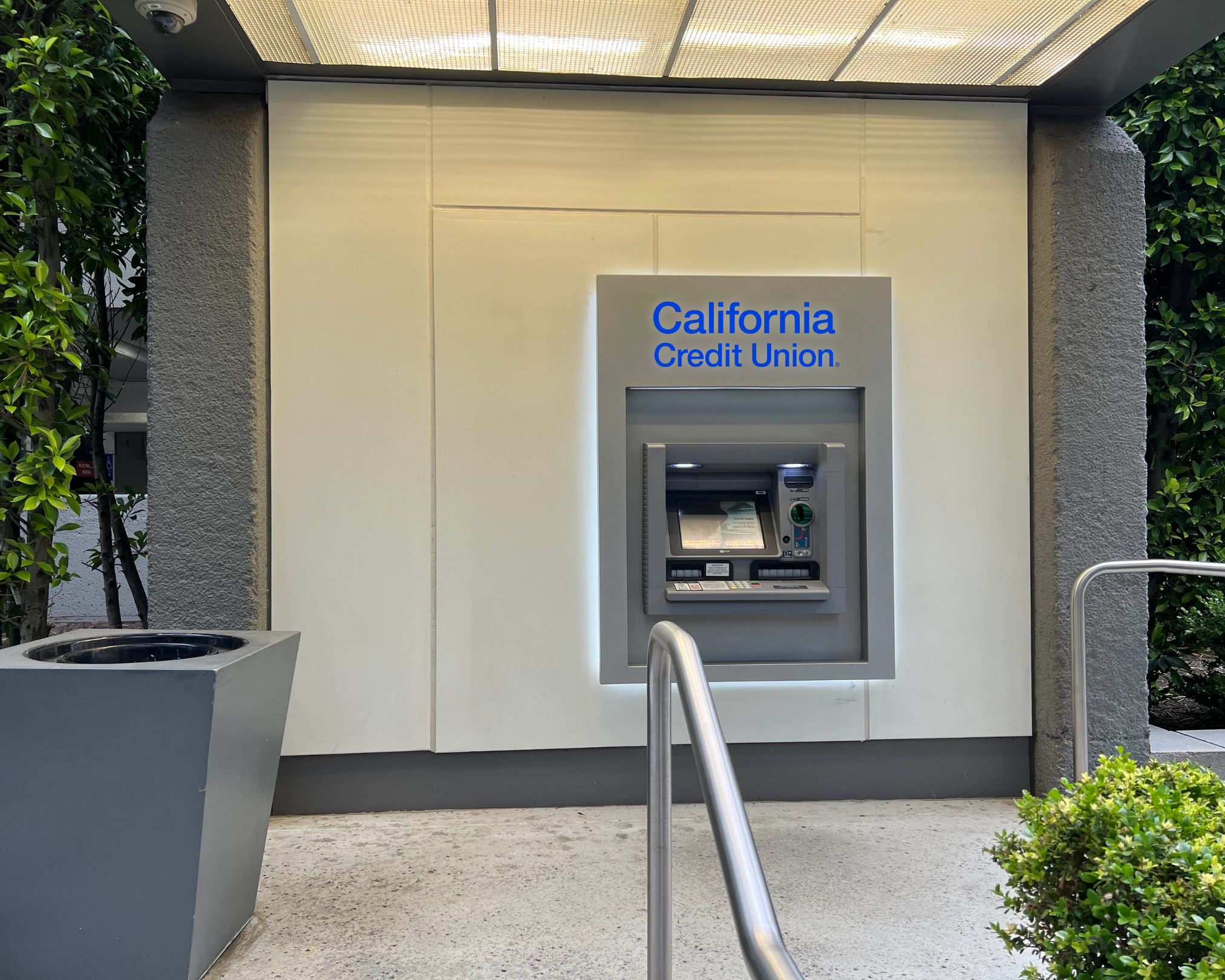
ATMs connect to your bank or credit union, letting you withdraw cash, check your balance and complete other banking transactions without visiting a branch. California Credit Union members have access to more than 85,000 surcharge-free ATMs across the country, so cash is rarely far out of reach.
- ATMs let you withdraw cash, check your balance, deposit funds and more without stepping inside a branch
- Every ATM transaction relies on your card, your PIN and a secure connection to your bank or credit union
- Withdrawal limits depend on your account, your institution and the ATM itself
- Cash and check deposits go through a verification process before the funds show up in your account
- California Credit Union offers access to more than 85,000 surcharge-free ATMs
Learn how how ATMs work to help you avoid potential scams and ensure you’re banking safely.
ATMs connect to your bank or credit union, letting you withdraw cash, check your balance and complete other banking transactions without visiting a branch. When you use an ATM, the machine securely verifies your card and PIN, communicates with your financial institution and processes your requested transaction.
Most of us use an ATM without ever thinking about what's happening inside the machine. However, understanding how ATMs work and the mechanisms that help the machine run can help you avoid potential scams and ensure you’re banking safely. Here's a look at how the process actually works, from swiping your card to walking away with cash.
Key Takeaways
- ATMs let you withdraw cash, check your balance, deposit funds and more without stepping inside a branch
- Every ATM transaction relies on your card, your PIN and a secure connection to your bank or credit union
- Withdrawal limits depend on your account, your institution and the ATM itself
- Cash and check deposits go through a verification process before the funds show up in your account
- California Credit Union offers access to more than 85,000 surcharge-free ATMs, so cash is rarely far out of reach
What Is an ATM?
An ATM (automated teller machine) is a self-service banking terminal that lets you handle everyday transactions without a teller. You'll find them at bank and credit union branches, grocery stores, gas stations and plenty of other spots around town. Access is fairly similar whether you're comparing a bank vs. credit union, since most institutions belong to at least one shared network. Understanding how ATMs work starts with knowing what the machine is doing behind the scenes: reading your card, confirming your identity and communicating with your financial institution in real time.
Most people use ATMs for quick cash withdrawals, but the machines can handle more than that. Depending on where you bank, an ATM might let you deposit funds, transfer money or print a statement. All of this is useful once you've figured out what you need to open a bank account and have started using your card.
What can you do at an ATM?
ATMs have come a long way from simple cash machines. Many now function almost like a mini branch, which is handy once you've finished opening your first bank account. Here are some of the most common things you can do:
- Withdraw cash: This is the most common ATM function and usually takes just a few seconds once your card and PIN are verified
- Check your account balance: You can pull up your current balance on the screen before or after a transaction
- Deposit cash or checks at supported ATMs: Many machines let you deposit cash or scan a check for processing, though availability depends on your bank or credit union
- Transfer money between eligible accounts: If you have a checking and savings account with the same institution, you can often move funds between them right at the machine
- Change your PIN: Some ATMs let you update your PIN on the spot without calling customer service
- Get a printed receipt: You can request a paper record showing the transaction details and your updated balance
Being able to move money between accounts is useful if you keep savings accounts separate from everyday spending. Not sure which account is right for you? Take a look at the different types of savings accounts to see which one fits your goals.
How Do ATMs Work?
Every ATM transaction follows a similar sequence, whether you're withdrawing $40 or checking your balance. Here's what happens each time you use one.
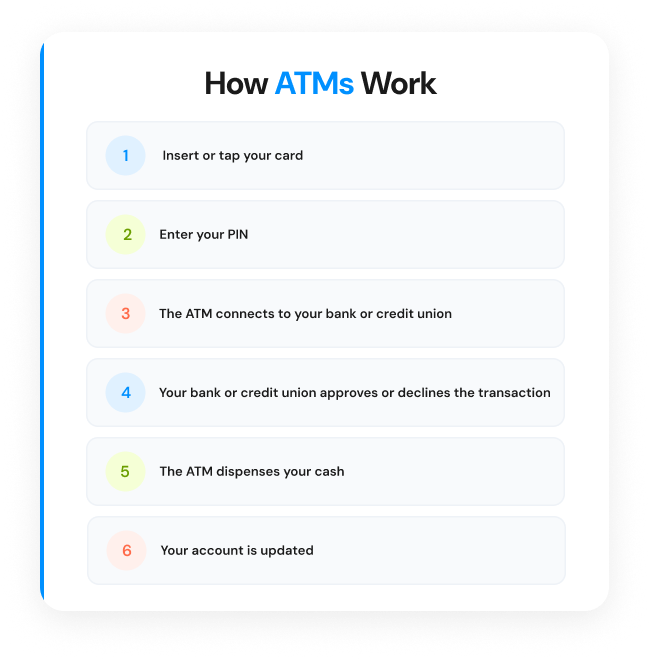
1. Insert or tap your card
The process starts when the ATM reads your debit card. Depending on the machine and your card type, this happens through the chip, the magnetic stripe or contactless tap technology. Since ATMs only work with debit cards, it helps to know the difference between debit vs credit cards before you head out. This step tells the machine which account to connect to before anything else can happen.
2. Enter your PIN
Next, you'll enter your personal identification number, or PIN. This four-to-six-digit code confirms that you're the person authorized to use the account, not just someone who has the card. Your PIN is encrypted the moment you enter it, so it's never transmitted in a readable format.
3. The ATM connects to your bank or credit union
Once your card and PIN are verified, the ATM sends your transaction request through a secure banking network to your financial institution. This happens almost instantly, even though the request may pass through several systems along the way.
4. Your bank or credit union approves or declines the transaction
Your financial institution runs a quick check before giving the green light, including:
- Card validity: Making sure the card hasn't been reported lost, stolen or expired
- PIN verification: Double-checking that the PIN matches the account on file
- Available funds: Confirming you have enough money in the account to cover the request
- Account restrictions: Checking for any holds, freezes or flags on the account
- Withdrawal limits: Verifying the request falls within your daily or per-transaction limit
5. The ATM dispenses your cash
If everything checks out, the ATM's cash dispenser gets to work. It pulls bills from the cash cassettes, counts them to match your requested amount and delivers them to the cash slot, usually within a few seconds.
6. Your account is updated
Finally, the withdrawal is recorded and your account balance updates to reflect the transaction, similar to how direct deposit posts to your account on a set schedule.
How Much Money Can You Withdraw From an ATM?
Withdrawal limits aren't the same for everyone. They depend on your account, your institution and the specific ATM you're using. Limits can vary between a checking vs. savings account, since savings accounts often carry extra withdrawal restrictions. Here's what typically affects how much cash you can pull out:
- Daily withdrawal limits: Most banks and credit unions cap the amount you can withdraw within a 24-hour period
- Available account balance: You can't withdraw more than what's actually in your account, even if your daily limit is higher
- ATM cash availability: Some machines run low on certain bill denominations, which can limit how much you're able to withdraw at that specific location
- Fraud or security controls: If your bank or credit union flags unusual activity, it may temporarily lower your limit or decline a transaction as a precaution
An ATM can decline a withdrawal even when you have enough money in your account. This usually comes down to hitting your daily limit, the ATM running low on cash or a security hold after unusual activity. Watching these limits is also a good habit if you're learning about saving money, since it helps you avoid dipping into funds you meant to set aside.
How Do ATM Deposits Work?
Not every ATM accepts deposits, but the ones that do make it simple to add cash or checks to your account without visiting a branch. If you've wondered whether you can deposit cash at an ATM, the answer is yes, as long as the machine supports it and belongs to your bank or credit union's network.
- Cash deposits: When you feed cash into a supported ATM, the machine counts and verifies each bill before crediting your account and often displays the bills detected so you can confirm the total
- Check deposits: The ATM scans the front and back of the check, captures the image and submits it for processing. Funds are usually available within one to two business days, though larger checks may take longer
If you're new to banking, you can open a bank account online and start using your debit card at any ATM in your institution's network right away.
Wrapping Up: Understanding How ATMs Work
An ATM transaction comes down to a few steps: your card and PIN verify your identity, your bank or credit union approves the request and the machine handles the cash or deposit on the spot. Knowing how this process works can help you manage your money and avoid surprises.
With California Credit Union, you're never far from a fee-free option. Members have access to a network of more than 85,000 surcharge-free ATMs worldwide, so getting cash or handling a quick transaction doesn't have to cost extra, no matter where you are.