

What Is a Profit and Loss Statement? How to Read and Use a P&L Statement
Last updated on August 25, 2026
A profit and loss statement, often called a P&L statement or income statement, summarizes a business’s revenue, expenses and profit over a specific period. Understanding how to read a profit and loss statement gives business owners the insight to make informed decisions, spot potential issues early and feel more prepared when it’s time to meet with a lender.
- A P&L statement shows revenue, expenses and profit or loss
- Reviewing it regularly can help track performance and control costs
- Lenders may use it to evaluate business loan applications
- Comparing statements over time can reveal financial trends
- Understanding your P&L can support smarter business decisions
Learn how to read a profit and loss statement and why lenders may use it to assess your business finances.
A profit and loss statement, often called a P&L statement or income statement, summarizes a business’s revenue, expenses and profit over a specific period, making it one of the most important tools for evaluating financial performance.
Whether you’re reviewing your company’s performance, preparing for tax season or applying for financing, few financial documents are as useful as a profit and loss statement. A P&L statement shows how much money your business brought in, what it spent and whether it finished the reporting period with a profit or a loss. Those numbers tell a story. They can reveal rising costs, shrinking margins or steady growth that might otherwise go unnoticed.
Understanding how to read a profit and loss statement gives business owners the insight to make informed decisions, spot potential issues early and feel more prepared when it’s time to meet with a lender. In this guide, we’ll explain what a profit and loss statement is, what it includes and how to use it to better understand your business’s financial health.
Key Takeaways
- A profit and loss statement (P&L statement) summarizes your business’s revenue, expenses and profit or loss over a specific reporting period
- Reviewing your P&L statement regularly can help you track financial performance, manage expenses and make informed business decisions
- Lenders often request a profit and loss statement when evaluating applications for business loans and other financing
- Comparing profit and loss statements over time can reveal trends that can help you plan for growth and strengthen your business’s financial position
What Is a Profit and Loss Statement?
A profit and loss statement, also called a P&L statement or income statement, is a financial report that summarizes a business’s revenue, expenses and profit or loss over a specific period. It helps business owners understand whether the company is making money, where it’s spending money and how its financial performance has changed over time.
Think of a profit and loss statement as a report card for your business’s finances. Every sale adds to the revenue side of the equation. Every operating expense, payroll cost, utility bill or inventory purchase reduces what remains. When the reporting period ends, the statement shows whether your business generated a profit or operated at a loss, helping with future business planning.
Why Is a Profit and Loss Statement Important?
A profit and loss statement is a key component of large and small business success, as it gives business owners a clear view of financial performance over a specific period. By tracking revenue, expenses and profitability, a P&L statement helps businesses understand what’s working, where costs may be increasing and where there may be opportunities to improve.
A P&L statement can help business owners:
- Track profitability: A profit and loss statement shows whether a business is generating enough revenue to cover expenses and produce a profit
- Make informed decisions: Reviewing income and expenses can help owners decide when to adjust spending, invest in growth or make changes to daily operations
- Identify financial trends: Comparing P&L statements over time can reveal patterns, such as rising expenses, seasonal changes in revenue or improvements in profit margins
- Prepare for financing: Lenders often review profit and loss statements when evaluating business loan applications. A consistent financial history can help demonstrate how a business is performing and support conversations about financing options like business loans
- Create realistic budgets: Understanding where money is coming from and where it’s going makes it easier to build a better budget and plan for future expenses
What Is Included in a Profit and Loss Statement?
A profit and loss statement shows how much money a business earned, what it spent and whether it made a profit or recorded a loss during a specific reporting period. Most P&L statements include the following components:
Revenue
Revenue is the total income your business earns from selling products or providing services before expenses are deducted. It reflects how much money comes into the business during the reporting period.
Cost of goods sold (COGS)
Cost of goods sold includes the direct costs associated with producing or delivering products or services. Depending on your business, this may include raw materials, inventory or direct labor.
Gross Profit
Gross profit is the amount remaining after subtracting the cost of goods sold from revenue. It helps measure how efficiently your business produces and sells its products or services before operating expenses are considered.
Operating expenses
Operating expenses are the day-to-day costs of running your business. Common examples include payroll, rent, utilities, insurance, software subscriptions, office supplies and marketing expenses.
Operating Income
Operating income shows how much your business earns from its core operations after operating expenses have been deducted from gross profit. It provides a clearer picture of ongoing business performance because it excludes items such as taxes and interest.
Net profit or net loss
Net profit, often called the “bottom line,” is the amount remaining after all expenses, interest and taxes have been deducted. A positive number means the business earned a profit during the reporting period. A negative number indicates the business operated at a loss.
Taken together, these figures help business owners understand where revenue is coming from, where money is being spent and whether the business is becoming more or less profitable over time.
Profit and Loss Statement Example
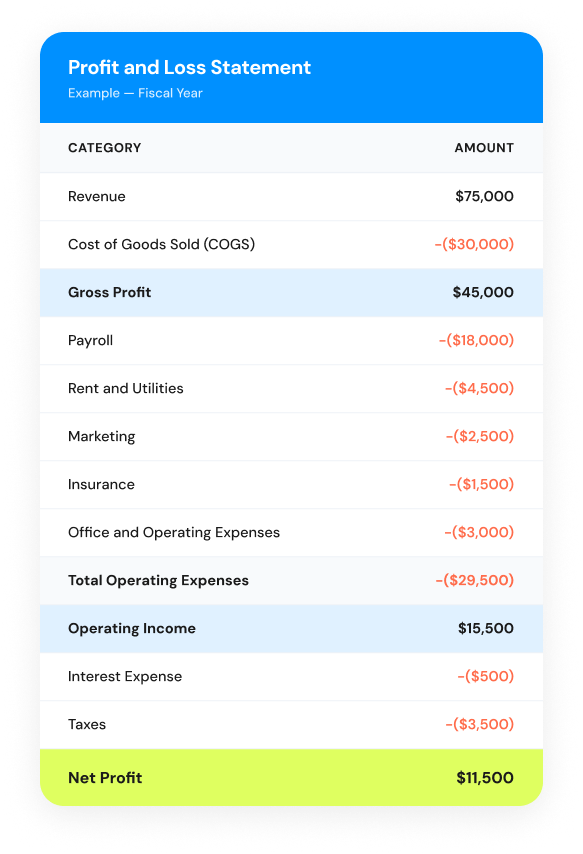
Seeing a profit and loss statement with real numbers can make it much easier to understand how each section fits together. The example below shows a simplified P&L statement for a fictional small business over one month. While every business organizes its financial reports a little differently, most profit and loss statements follow this same general format.
How to Read a Profit and Loss Statement
A profit and loss statement does more than tell you whether your business made money. It shows where that money came from, where it went and how those numbers have changed over time so you can make informed decisions and revitalize your business routine. As you review your P&L statement, focus on a few key areas rather than trying to interpret every line at once.
- Review revenue trends: Start with your revenue. Is it growing, holding steady or beginning to decline? Looking at revenue across several months or quarters can help you spot seasonal patterns, measure growth and identify changes that deserve a closer look
- Evaluate gross profit margins: Gross profit shows how much revenue remains after covering the direct costs of producing your products or services. If your margin starts to shrink, it could signal rising material costs, higher labor expenses or pricing that no longer reflects your costs
- Analyze operating expenses: Compare categories such as rent, payroll, marketing and utilities to previous reporting periods. Small increases are expected from time to time, but larger shifts may point to areas where spending should be reviewed
- Examine net profit: Net profit is your bottom line. A healthy profit means your revenue exceeded your expenses during the reporting period. If your business posted a loss, look beyond the final number to understand which expenses or changes in revenue had the biggest impact
- Compare results over time: One profit and loss statement provides a snapshot, but several tell a story. Reviewing your statements month over month or year over year makes it easier to spot long-term trends, measure progress and make decisions based on real financial performance instead of assumptions
Understanding Your Profit and Loss Statement
A profit and loss statement is one of the most useful tools for understanding how your business is performing. Reviewing it regularly can help you monitor your revenue, manage expenses and make informed decisions with greater confidence. Whether you’re planning for future growth or preparing to apply for financing, having a clear picture of your business’s financial health can help you move forward with confidence.
Looking for more ways to support your business? Enjoy the benefits of a credit union with California Credit Union, where you can explore our business banking accounts for everyday banking solutions or learn how our business loans, such as SBA loans, can help you finance equipment, expansion, working capital and other business goals.